Calendars
Pre-K · Approx. ages 3–5
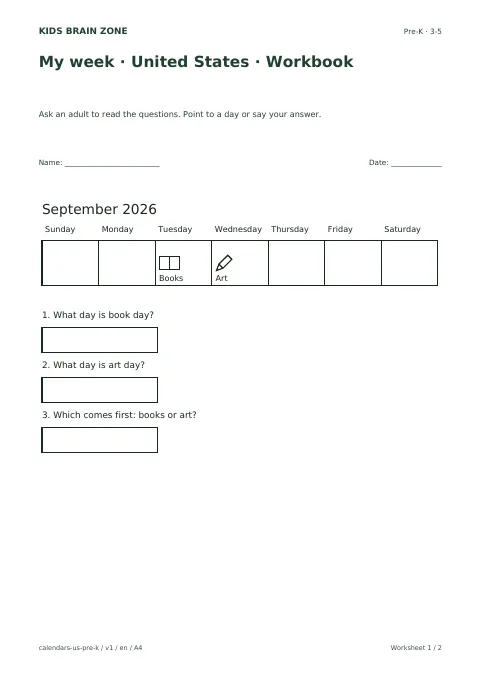
My week · United States · Workbook
Ask an adult to read the questions. Point to a day or say your answer.
Explore workbook : My week · United States · WorkbookFree PDF · A4
Start with a week of familiar routines, then read dates and count days across months. Choose a school-system edition in the language you’re browsing.
School names are approximate age matches. Choose by the skills your child is comfortable with, not the label alone.
No workbooks for this activity at this stage yet. Choose another stage or view all stages.
Calendars
Pre-K · Approx. ages 3–5
Ask an adult to read the questions. Point to a day or say your answer.
Explore workbook : My week · United States · WorkbookCalendars
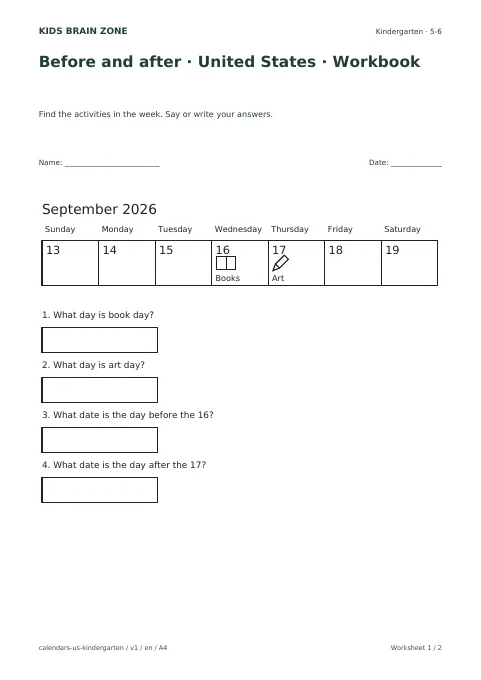
Kindergarten · Approx. ages 5–6
Find the activities in the week. Say or write your answers.
Explore workbook : Before and after · United States · WorkbookCalendars
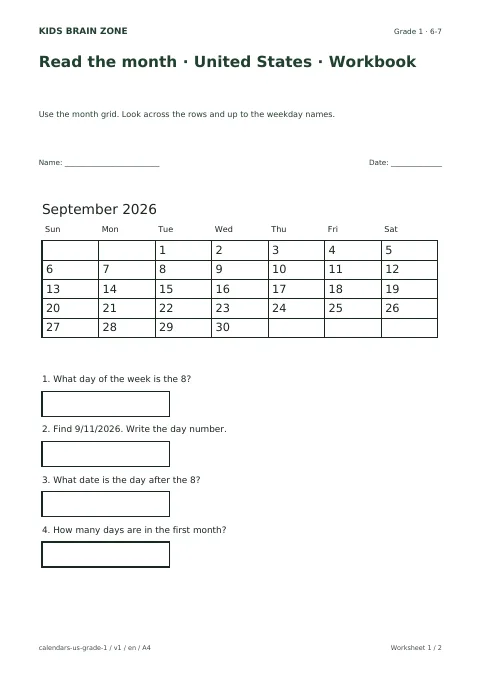
Grade 1 · Approx. ages 6–7
Use the month grid. Look across the rows and up to the weekday names.
Explore workbook : Read the month · United States · WorkbookCalendars
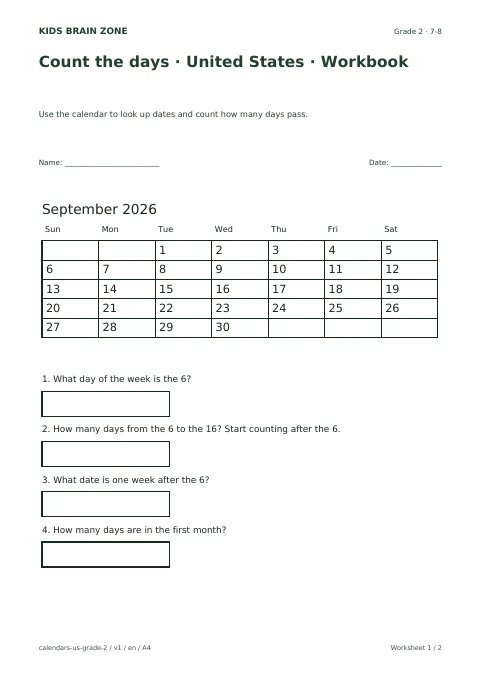
Grade 2 · Approx. ages 7–8
Use the calendar to look up dates and count how many days pass.
Explore workbook : Count the days · United States · WorkbookCalendars
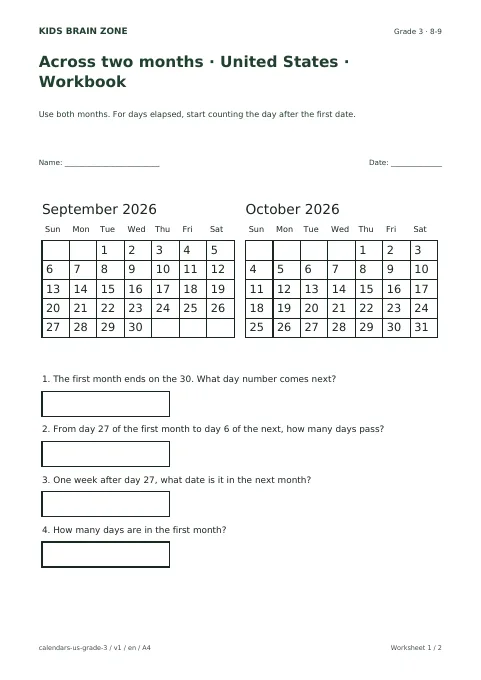
Grade 3 · Approx. ages 8–9
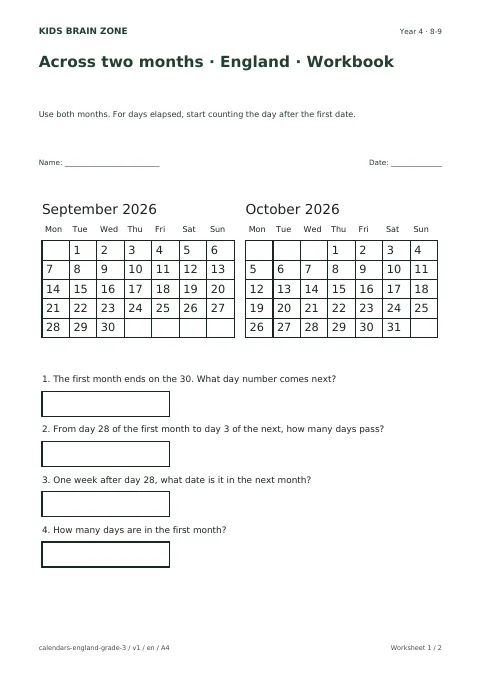
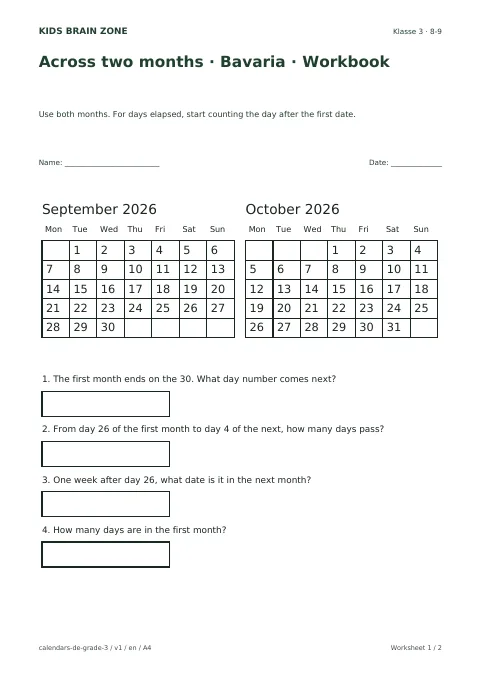
Use both months. For days elapsed, start counting the day after the first date.
Explore workbook : Across two months · United States · WorkbookCalendars
Nursery / Reception · Approx. ages 3–5
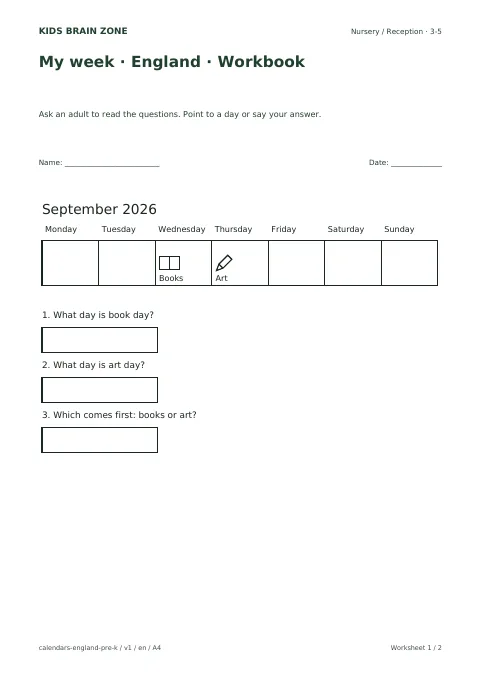
Ask an adult to read the questions. Point to a day or say your answer.
Explore workbook : My week · England · WorkbookCalendars
Year 1 · Approx. ages 5–6
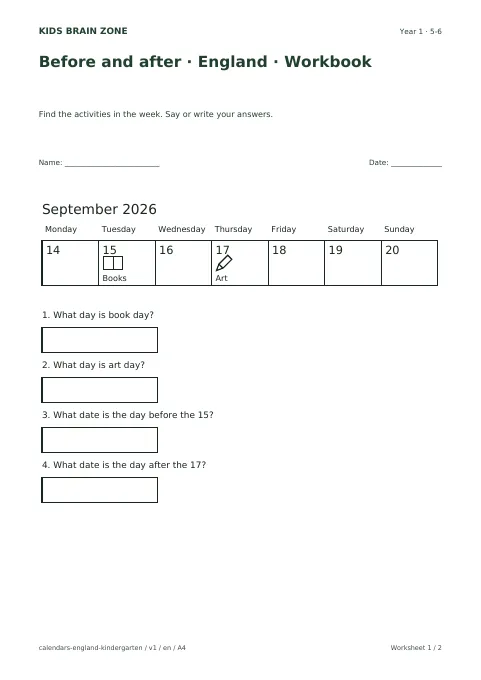
Find the activities in the week. Say or write your answers.
Explore workbook : Before and after · England · WorkbookCalendars
Year 2 · Approx. ages 6–7
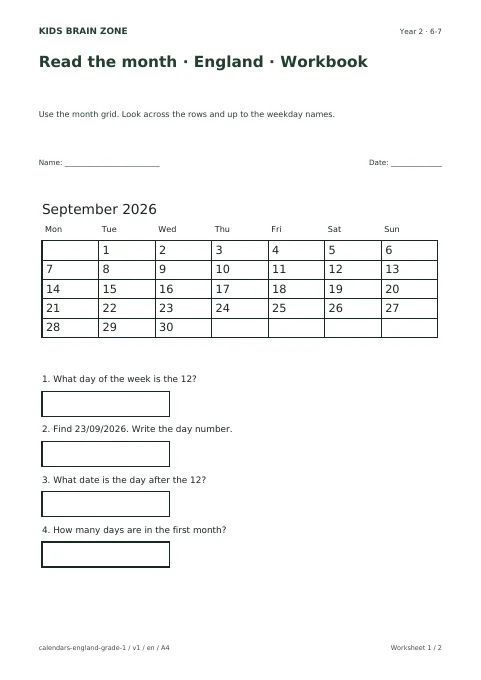
Use the month grid. Look across the rows and up to the weekday names.
Explore workbook : Read the month · England · WorkbookCalendars
Year 3 · Approx. ages 7–8
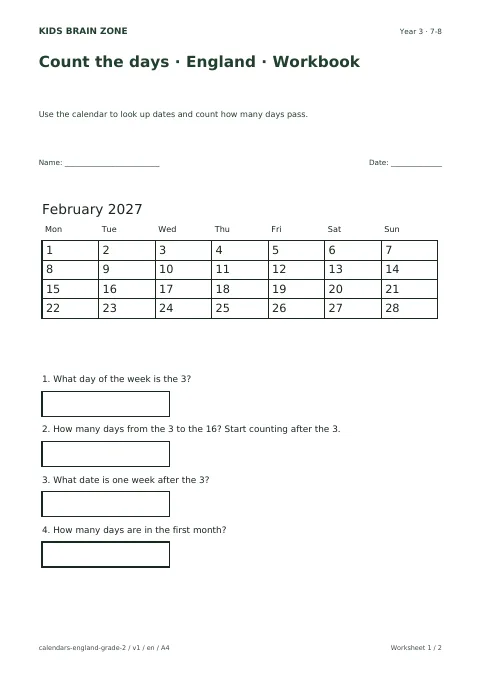
Use the calendar to look up dates and count how many days pass.
Explore workbook : Count the days · England · WorkbookCalendars
Year 4 · Approx. ages 8–9
Use both months. For days elapsed, start counting the day after the first date.
Explore workbook : Across two months · England · WorkbookCalendars
Preschool / early years · Approx. ages 3–5
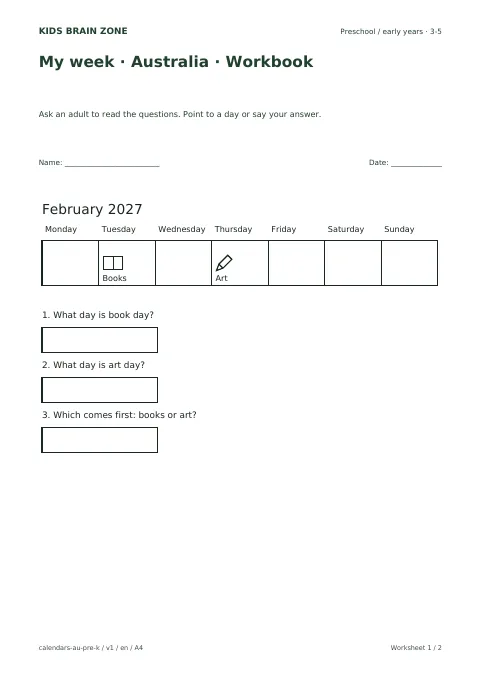
Ask an adult to read the questions. Point to a day or say your answer.
Explore workbook : My week · Australia · WorkbookCalendars
Foundation / Prep · Approx. ages 5–6
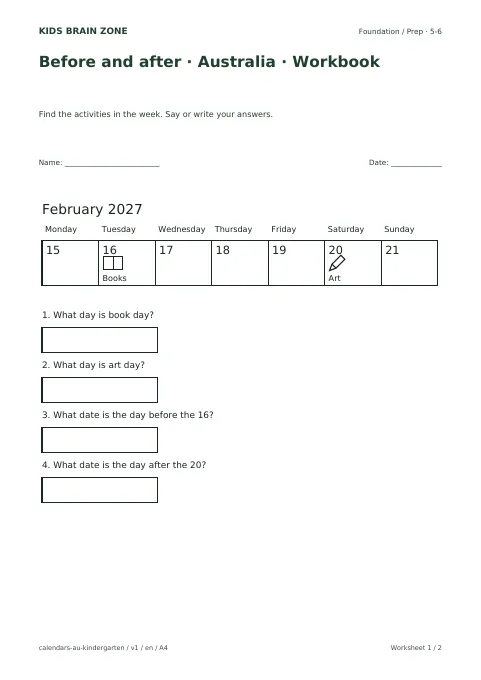
Find the activities in the week. Say or write your answers.
Explore workbook : Before and after · Australia · WorkbookCalendars
Year 1 · Approx. ages 6–7
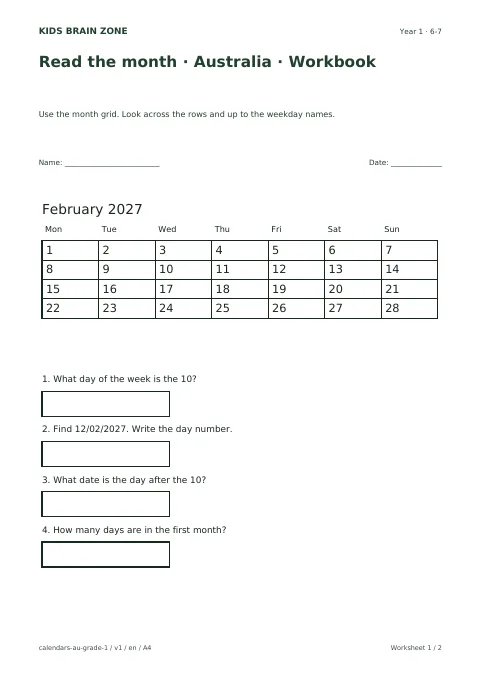
Use the month grid. Look across the rows and up to the weekday names.
Explore workbook : Read the month · Australia · WorkbookCalendars
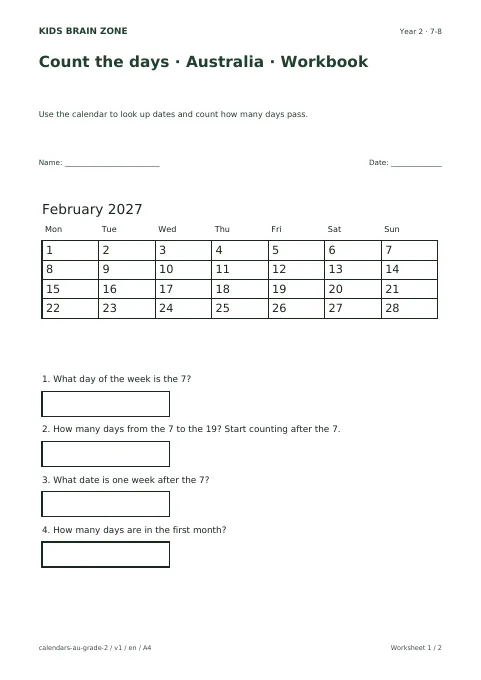
Year 2 · Approx. ages 7–8
Use the calendar to look up dates and count how many days pass.
Explore workbook : Count the days · Australia · WorkbookCalendars
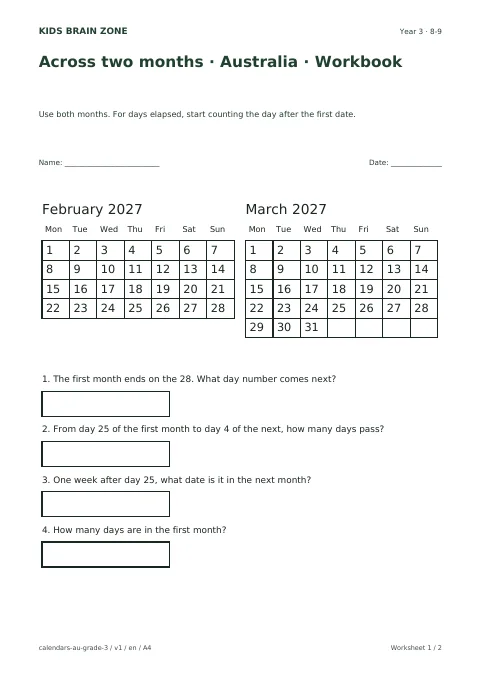
Year 3 · Approx. ages 8–9
Use both months. For days elapsed, start counting the day after the first date.
Explore workbook : Across two months · Australia · WorkbookCalendars
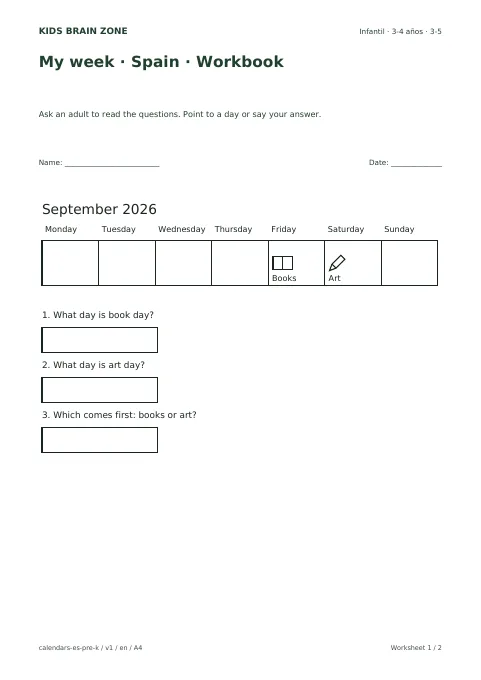
Infantil · 3–4 años · Approx. ages 3–5
Ask an adult to read the questions. Point to a day or say your answer.
Explore workbook : My week · Spain · WorkbookCalendars
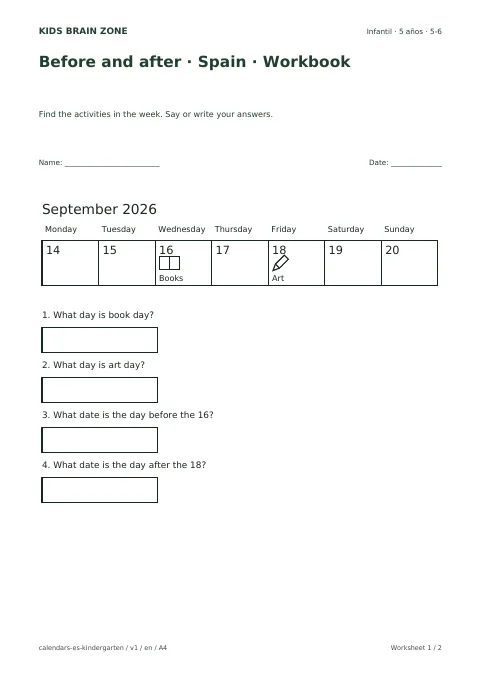
Infantil · 5 años · Approx. ages 5–6
Find the activities in the week. Say or write your answers.
Explore workbook : Before and after · Spain · WorkbookCalendars
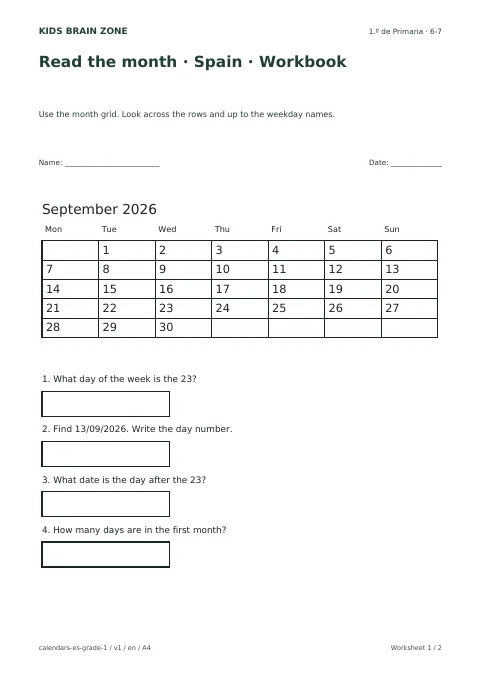
1.º de Primaria · Approx. ages 6–7
Use the month grid. Look across the rows and up to the weekday names.
Explore workbook : Read the month · Spain · WorkbookCalendars
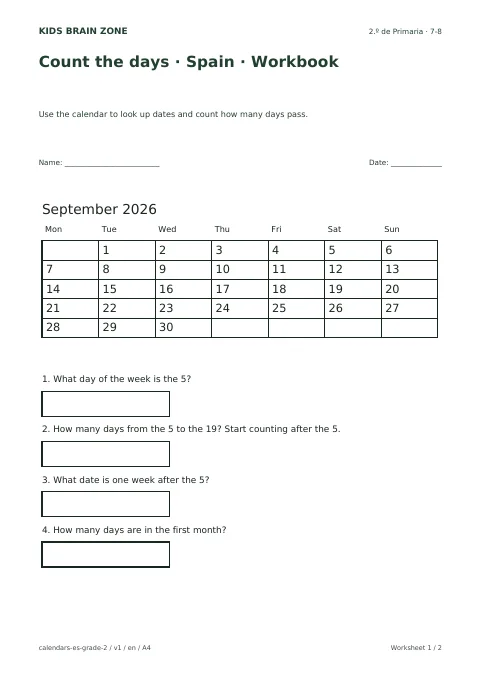
2.º de Primaria · Approx. ages 7–8
Use the calendar to look up dates and count how many days pass.
Explore workbook : Count the days · Spain · WorkbookCalendars
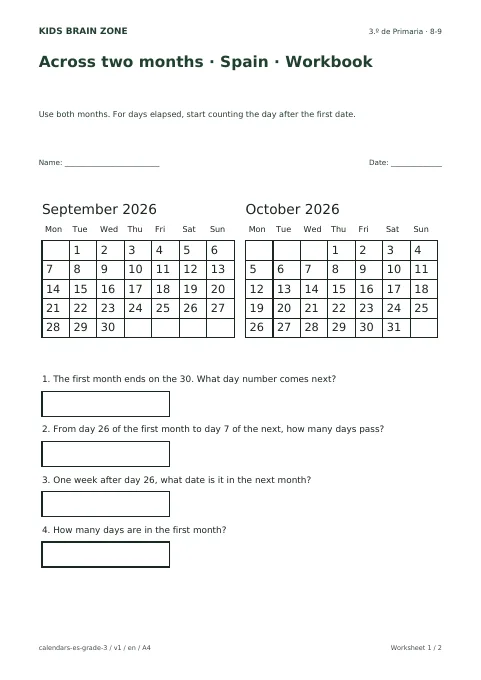
3.º de Primaria · Approx. ages 8–9
Use both months. For days elapsed, start counting the day after the first date.
Explore workbook : Across two months · Spain · WorkbookCalendars
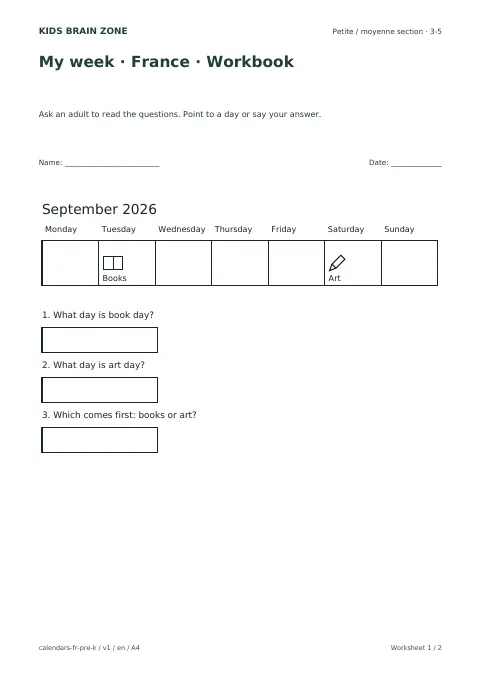
Petite / moyenne section · Approx. ages 3–5
Ask an adult to read the questions. Point to a day or say your answer.
Explore workbook : My week · France · WorkbookCalendars
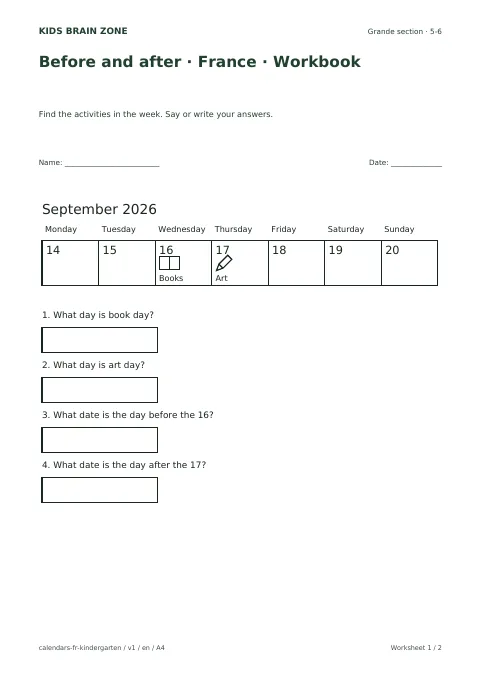
Grande section · Approx. ages 5–6
Find the activities in the week. Say or write your answers.
Explore workbook : Before and after · France · WorkbookCalendars
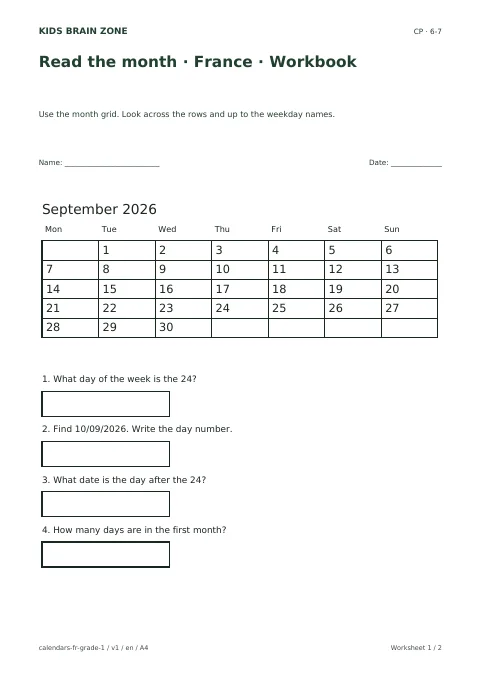
CP · Approx. ages 6–7
Use the month grid. Look across the rows and up to the weekday names.
Explore workbook : Read the month · France · WorkbookCalendars
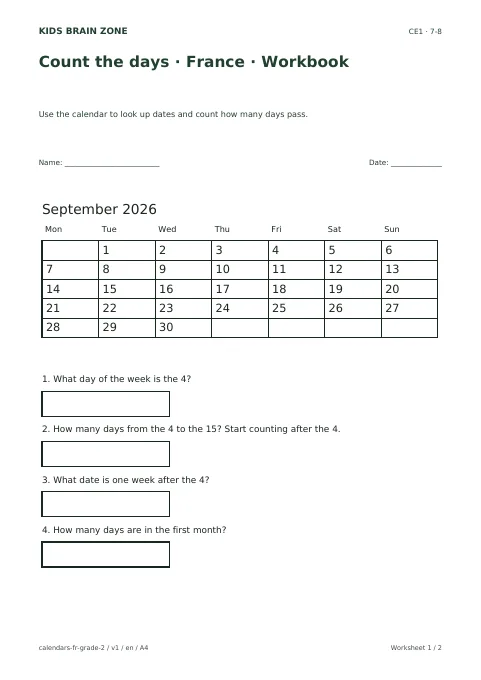
CE1 · Approx. ages 7–8
Use the calendar to look up dates and count how many days pass.
Explore workbook : Count the days · France · WorkbookCalendars
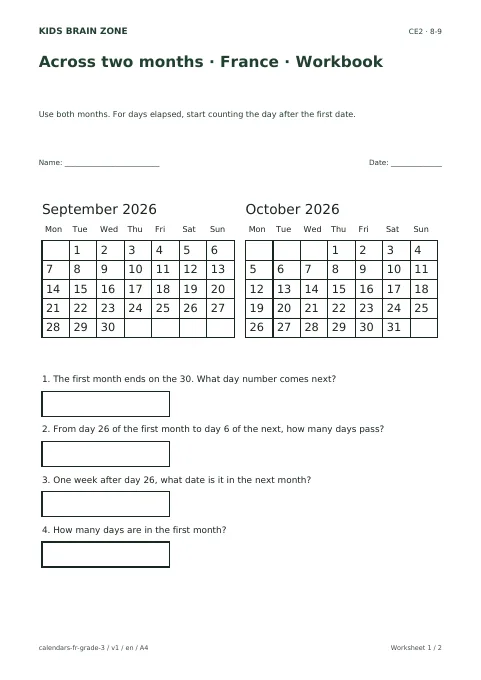
CE2 · Approx. ages 8–9
Use both months. For days elapsed, start counting the day after the first date.
Explore workbook : Across two months · France · WorkbookCalendars
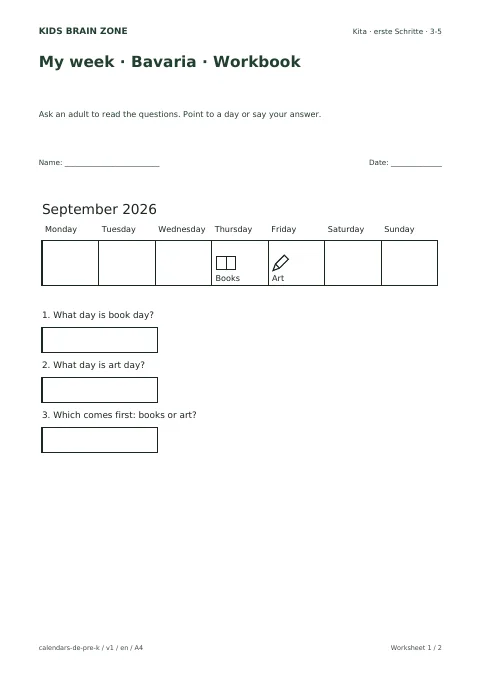
Kita · erste Schritte · Approx. ages 3–5
Ask an adult to read the questions. Point to a day or say your answer.
Explore workbook : My week · Bavaria · WorkbookCalendars
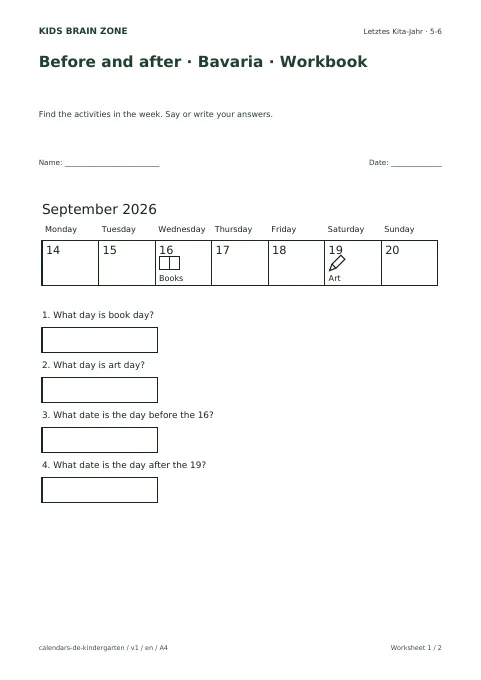
Letztes Kita-Jahr · Approx. ages 5–6
Find the activities in the week. Say or write your answers.
Explore workbook : Before and after · Bavaria · WorkbookCalendars
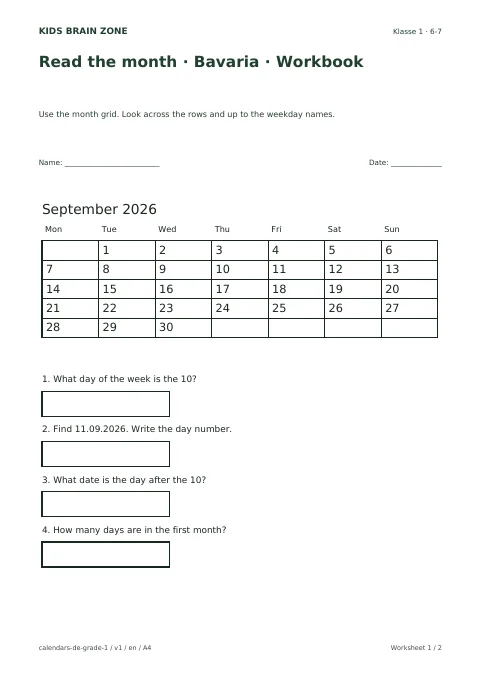
Klasse 1 · Approx. ages 6–7
Use the month grid. Look across the rows and up to the weekday names.
Explore workbook : Read the month · Bavaria · WorkbookCalendars
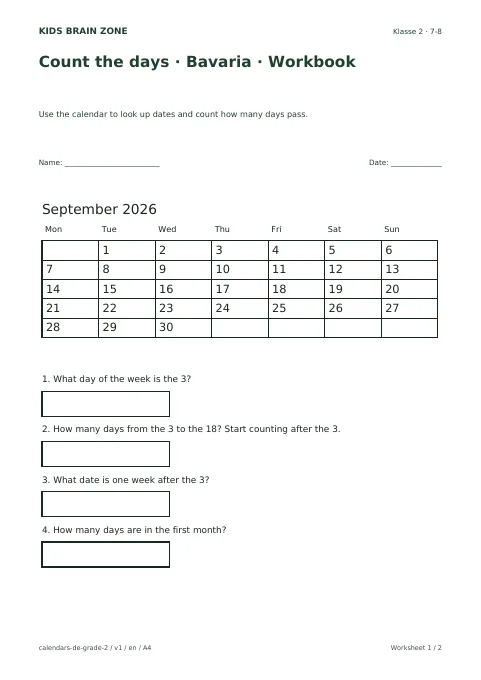
Klasse 2 · Approx. ages 7–8
Use the calendar to look up dates and count how many days pass.
Explore workbook : Count the days · Bavaria · WorkbookCalendars
Klasse 3 · Approx. ages 8–9
Use both months. For days elapsed, start counting the day after the first date.
Explore workbook : Across two months · Bavaria · Workbook